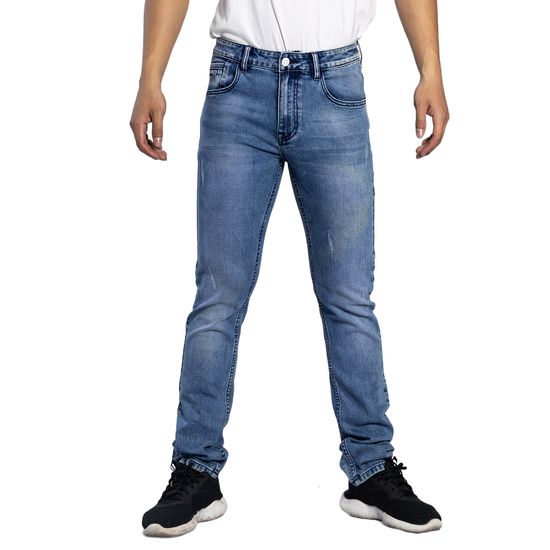
Customized Men's Jeans with Embroidery Design

High Street Men Letter Embroidery Stretch Slim Fit Cotton Denim Jeans

Men's Vintage Water-Washed High-Waist Wide-Leg Factory OEM Custom Jeans

I have found results from4000+products and1000+suppliers aboutEmbroidery men jeans


When sourcing embroidery jeans, you must prioritize fabric weight (typically 12-14 oz for premium denim) and composition (98% cotton, 2% spandex for comfort stretch). The embroidery itself should be evaluated based on stitch density and the use of colorfast polyester threads to prevent bleeding during washing. Ensure the internal backing (stabilizer) is soft to avoid skin irritation and that reinforced stitching is applied to high-stress areas like the crotch and pockets.
To ensure market entry and consumer safety, verify that the products meet OEKO-TEX® Standard 100 for chemical safety and REACH regulations for the EU market. For the US, compliance with CPSIA regarding lead content in buttons and zippers is mandatory. Additionally, look for suppliers with ISO 9001 certification for quality management and BSCI or Sedex audits to ensure ethical manufacturing practices.
Request a wash test report to ensure the embroidery does not shrink or pucker differently than the denim fabric. The embroidery tension should be uniform, with no loose threads or 'bird-nesting' on the reverse side. For high-end designs, check if the supplier uses 3D embroidery techniques or appliqué patches, and confirm that the colorfastness to rubbing and washing meets a minimum grade of 4.0.
A professional supplier should offer digitizing services to convert your artwork into embroidery files and provide CAD mockups before sampling. Look for factories equipped with multi-head Tajima or Barudan machines for precision. They should also offer various denim washes, such as enzyme wash, stone wash, or acid wash, and the ability to customize branded hardware (buttons, rivets) and leather back patches.
Always utilize secure payment methods and consider using Trade Assurance services provided by reputable platforms like Made-in-China.com to protect your funds. Conduct a third-party pre-shipment inspection (PSI) to verify that the embroidery quality and quantity match your Purchase Order (PO) before the final balance is paid.
Focus on tiered pricing structures; for example, increasing your order from 300 to 1,000 pieces can often reduce the unit cost by 15-20%. If you are a startup, negotiate a lower MOQ for stock fabrics while paying a slight premium for custom embroidery designs. Always request a breakdown of costs (fabric, embroidery, washing, and trim) to identify where savings can be made.
Denim is heavy, so sea freight (LCL or FCL) is the most cost-effective for bulk orders, while air freight should be reserved for samples or urgent restocks. Ensure the supplier uses moisture-proof packaging (silica gel packets) and heavy-duty polybags to prevent mildew during long-duration sea transit. Verify the HS Code (usually 620342) to accurately calculate import duties in your destination country.