
Satisfies 1 requirement
Sand Stone Packing FIBC Big Bag PP Woven Jumbo Bulk Bag 1000kg for Transport Rice Feed Food Fertilizer Mineral Mining Constryction Materials Waste
US$2.00-2.50
200 Pieces(MOQ)

I have found results from30000+products and10000+suppliers aboutWholesale big rice bag




For wholesale rice packaging, BOPP Laminated PP Woven Bags are the industry standard. You should ensure a fabric weight of at least 65-80 GSM for 25kg bags and 90-120 GSM for 50kg bags to prevent bursting. The BOPP film provides a moisture barrier and allows for high-definition rotogravure printing (up to 10 colors) for branding.
Suppliers must provide Food Grade Certification. Look for compliance with FDA (US) or EC 1935/2004 (EU) standards. It is critical to verify that the printing inks are lead-free and toluene-free to prevent chemical migration into the rice. Request ISO 22000 or HACCP certifications from the manufacturer to ensure sanitary production environments.
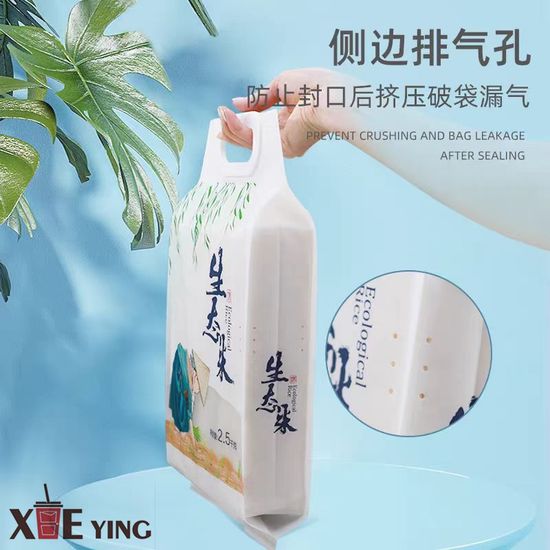
To optimize logistics, specify anti-skid weaving or anti-slip coating to prevent stacks from collapsing in warehouses. For moisture protection, request an inner PE liner (25-50 microns) or micro-perforations if the rice needs to 'breathe' to prevent mold. Ensure the bottom stitching is double-folded and double-stitched to handle the weight during mechanical loading.
Customization is highly cost-effective at scale. While copperplate cylinder fees are an upfront cost (typically $80-$150 per color), they are a one-time investment. For orders exceeding 10,000 units, the unit cost difference between plain and custom-printed bags becomes negligible, often less than $0.02 per bag, providing significant brand value.
Always request a pre-shipment inspection (PSI). A common risk in bulk plastic goods is 'down-gauging' where the supplier uses thinner material to save costs. Use a micrometer to verify GSM and perform a drop test (1.5 meters) with a full load. Platforms like Made-in-China.com offer Secured Trading services that hold payment until quality is verified.
Focus on Total Linear Meter weight rather than just unit price. Negotiate based on raw polypropylene (PP) market price indexes. If you are a long-term buyer, ask for free cylinder storage and a 5-10% discount on repeat orders where setup time is reduced. Always clarify if the quoted price is FOB (Free On Board) to avoid hidden port charges.
Empty bags are high-volume but relatively low-weight. To save on sea freight, ensure the supplier uses hydraulic baling presses to compress the bags into tight bales. This can increase container capacity by 30-40%. For a 20GP container, you should expect to fit approximately 8-10 tons of woven bags depending on the GSM.
Ensure your brand artwork is registered or protected via a non-disclosure agreement (NDA) before sending high-res files. Use Made-in-China.com's Audit Reports to verify the supplier's factory existence. Always pay through audited channels and avoid direct transfers to private bank accounts to prevent payment fraud.