
Satisfies 1 requirement
Portable Luxury Prefabricated Expandable Container Mobile Home
US$4,000.00-9,550.00
1 Piece(MOQ)

I have found results from200000+products and90000+suppliers aboutPrefabricated container


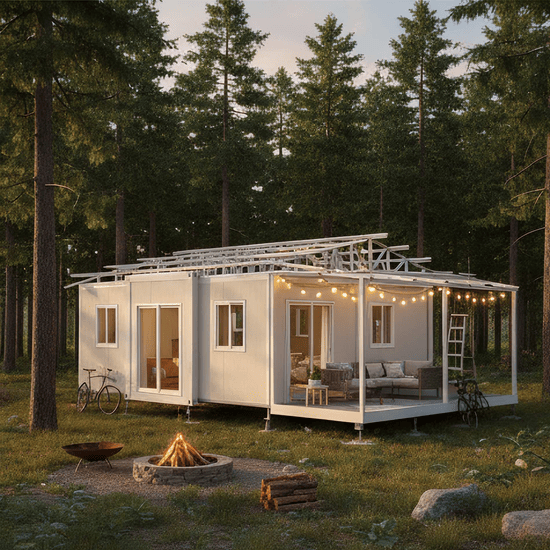


When sourcing prefabricated containers, focus on the structural integrity and material quality. Ensure the main frame uses galvanized steel with a thickness of at least 2.5mm to 3.0mm to prevent corrosion. For insulation, Rockwool or Polyurethane (PU) sandwich panels are preferred over EPS for better fire resistance (Class A) and thermal efficiency. Additionally, verify that the floor loading capacity meets your specific use case, typically requiring ≥250kg/m² for residential and higher for industrial storage.
Compliance is critical for legal installation. You must ensure the supplier provides CE certification for the European market or meets ASTM standards for North America. Specifically, look for ISO 9001 for manufacturing quality and ISO 14001 for environmental management. If the container is for housing, it must comply with local building codes regarding electrical wiring (e.g., UL or VDE listed components) and plumbing pressure tests.
Request data on wind load resistance (should be ≥0.6KN/m² or Grade 11 typhoon resistance) and snow load capacity. The exterior paint should be marine-grade epoxy zinc-rich primer to withstand high-salinity environments. For the roof, a centralized drainage system with integrated gutters and downpipes is essential to prevent water pooling and leakage during heavy rain.
A top-tier supplier on Made-in-China.com should provide modular flexibility, allowing for the stacking of units (up to 3 levels) and internal layout modifications. Look for options to customize window types (double-glazed tempered glass), external cladding (WPC or fiber cement board) for aesthetics, and pre-installed electrical/plumbing systems to reduce on-site labor costs.
The biggest risks are structural damage during transit and non-compliance with local zoning laws. To mitigate these, use Third-Party Inspection services (like SGS or Intertek) to verify the steel frame and welding quality before the balance payment. Always request a trial assembly video from the factory to ensure all components fit perfectly before they are flat-packed.
For 'Flat-pack' containers, you can usually fit 4 units in a standard 40HC shipping container, which significantly reduces freight costs compared to shipping fully assembled units. For 'Detachable' types, up to 15 units can fit in a 40HC. Always clarify the Incoterms (FOB vs CIF); for large structures, FOB is often recommended so you can maintain control over the shipping line and avoid inflated destination charges.
Don't just negotiate on the unit price; negotiate on the warranty period (aim for ≥15 years on the structure) and the inclusion of spare parts (like extra sealants, bolts, and touch-up paint). Ask for volume-based discounts—typically 5-10% for orders exceeding 10 units. Mention that you are sourcing via Made-in-China.com to leverage their trade security and supplier audit reports.
Utilize Secured Trading services to ensure your funds are only released after the supplier provides the Bill of Lading (B/L). Avoid direct wire transfers to private accounts. Ensure the Sales Contract explicitly states the steel grade, insulation density, and fire rating, as these are the most common areas where low-quality suppliers substitute materials.