
Satisfies 1 requirement
China Factory Diamond Cutting Disc Circular Diamond Saw Blade Circular Saw Blade
US$40.00-100.00
5 Pieces(MOQ)

I have found results from30000+products and10000+suppliers aboutDiamond cutting blade factory


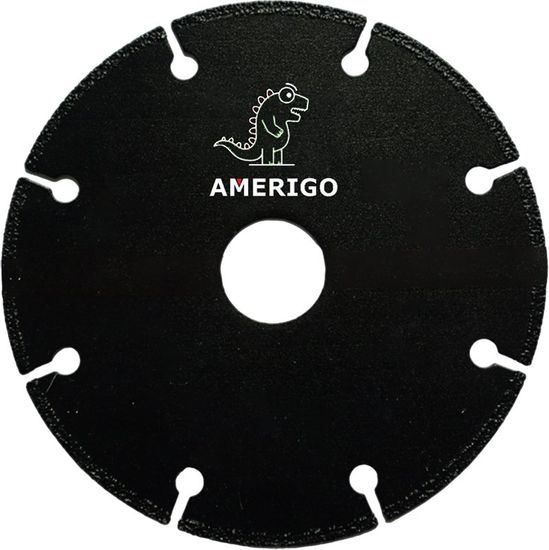


When sourcing from a factory, you must prioritize the bond hardness and diamond concentration. For cutting hard materials like granite or reinforced concrete, a soft metal bond is required to expose new diamonds, while soft materials like asphalt require a hard bond. Ensure the blades utilize laser-welding technology for the segments rather than high-frequency welding to prevent segment loss during high-speed operation. Always verify the bore size and reduction ring availability to ensure compatibility with your specific machinery.
Safety is paramount in abrasive tools. Ensure the factory complies with EN 13236, which is the European safety standard for superabrasive products. For the North American market, look for ANSI B7.1 compliance. Additionally, a reputable manufacturer should hold ISO 9001:2015 for quality management and oSa (Organization for the Safety of Abrasives) certification, which indicates the highest level of testing for centrifugal force and side-load resistance.
The distinction lies in the segment height and diamond grit quality. Professional-grade blades typically feature a segment height of 10mm to 15mm, whereas DIY blades are often 7mm or less. Request a technical data sheet specifying the diamond grade (e.g., MBD series); professional blades use high-grade synthetic diamonds with high thermal stability. Furthermore, professional blades often feature cooling holes or 'keyhole' gullets designed for continuous heat dissipation during heavy-duty dry cutting.
The design must match the application: Continuous Rim blades are essential for chip-free cutting of ceramic and porcelain tiles; Segmented Rim blades are best for fast, aggressive cutting of brick and concrete where finish quality is secondary; and Turbo Rim blades offer a middle ground for general-purpose masonry. If your project involves wet cutting, ensure the factory provides blades with a core designed to resist rust and water-induced tension loss.
The biggest risk is tension instability in the steel core, which causes the blade to wobble or 'snake' at high RPMs. To mitigate this, require the factory to perform a run-out test and provide a video of the dynamic balance testing for your specific batch. Another risk is counterfeit diamond grit; always use Made-in-China.com's Secured Trading services to ensure that the product specifications delivered match the samples approved.
Do not negotiate on unit price alone, as factories may reduce the diamond concentration to meet a lower price point. Instead, negotiate based on 'Cost Per Cut' (CPC). Ask for a performance guarantee regarding the total linear meters the blade can cut. For bulk orders, request customized laser-marking (OEM) and private label packaging, which are often included for free if the order exceeds 500-1,000 units.
Diamond blades are heavy and susceptible to surface oxidation if exposed to moisture during sea freight. Insist on VCI (Volatile Corrosion Inhibitor) packaging or vacuum-sealed plastic wrapping. Because of the weight-to-volume ratio, LCL (Less than Container Load) shipping is common; ensure the pallets are reinforced with steel strapping to prevent shifting, as damaged edges can render a diamond blade useless and dangerous.
Be aware of Anti-Dumping Duties (ADD). Certain countries, including the US, have historically applied high anti-dumping margins on diamond saw blades from specific regions. Always check the Harmonized System (HS) Code (typically 8202.39) against your country's trade portal to calculate the Total Landed Cost including any protective tariffs before finalizing the transaction.