
Satisfies 1 requirement
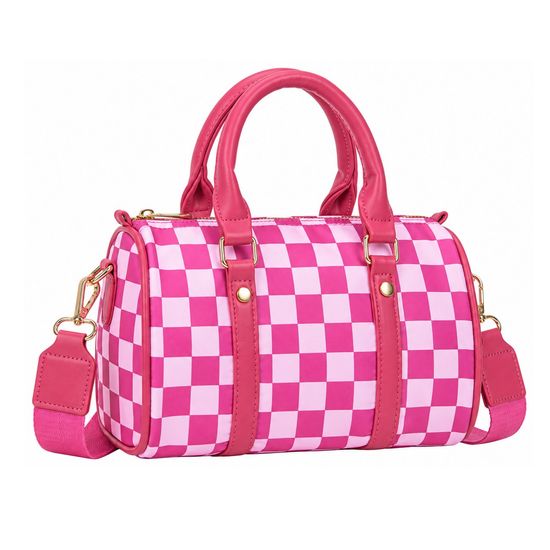
Large Capacity Custom Logo Splicing Cotton Sloping Shoulder Handbag
US$0.30-0.51
2,000 Pieces(MOQ)

I have found results from200000+products and80000+suppliers aboutCustom logo handbags price




When sourcing custom handbags, the material choice directly impacts the perceived value and durability. For high-end markets, prioritize Full-Grain or Top-Grain Leather for longevity. For eco-conscious or budget-friendly lines, specify High-Quality PU (Polyurethane) or RPET (Recycled Polyester). Ensure the material thickness is at least 1.2mm to 1.5mm for structural integrity, and verify that the lining material (such as polyester or cotton twill) is tear-resistant.
The choice of technique depends on the material and brand aesthetic. Embossing or Debossing provides a subtle, permanent luxury feel that won't fade. Silk Screen Printing is cost-effective for large logos but may crack over time. For a premium look, Metal Plate Logos (Zinc Alloy with electroplating) are highly recommended; ensure they are anti-oxidation treated to prevent tarnishing. Hot Stamping (Gold/Silver foil) is excellent for high-contrast branding but requires a protective coating for daily use.
Compliance is critical to avoid customs seizures. For the US market, products must comply with California Proposition 65 regarding lead and phthalate content. For the EU market, ensure adherence to REACH regulations concerning chemical substances in dyes and synthetic materials. If you are sourcing 'Vegan Leather,' request PETA-Approved certifications or GRS (Global Recycled Standard) documentation to validate environmental claims.
Focus on the 'hidden' details: Stitch density should be consistent, typically 7-9 stitches per inch. Check the edge paint (Inking); it should be smooth, multi-layered, and free of bubbles or drips. Test the hardware quality by zipping and unzipping multiple times—YKK or SBS zippers are industry benchmarks for reliability. Finally, inspect the load-bearing points (where straps meet the body) for reinforced stitching or rivets.
To prevent quality discrepancies, always use a 'Golden Sample' strategy. Have the supplier sign and seal two identical samples: one for them to keep as a production reference and one for you. Explicitly state in the Purchase Order (PO) that the bulk goods must match the sample's pantone color, hardware weight, and stitching tension. Utilizing a third-party pre-shipment inspection (PSI) is the most effective way to ensure these standards are met before final payment.
Negotiation should focus on Total Cost of Ownership (TCO) rather than just the unit price. Ask for a price breakdown (material cost, labor, branding, and packaging). You can often reduce costs by standardizing hardware across different bag designs or increasing the MOQ (Minimum Order Quantity) for the raw material while keeping the finished bag quantity lower. On platforms like Made-in-China.com, look for 'Audited Suppliers' to ensure you are dealing with a factory rather than a middleman, which can save 10-15% in commissions.
Handbags are 'volumetric' cargo. To save on shipping, request efficient packaging such as 'nesting' (putting smaller bags inside larger ones) or shipping bags flat-packed if the design allows. For high-value leather goods, use Sea-Air combined transport to balance cost and speed. Ensure the supplier uses silica gel desiccant packets in every bag and non-woven dust bags to prevent mold and scratches during long-duration maritime transit.
Never send full payment upfront. The industry standard is a 30% deposit and 70% balance after inspection but before shipment. Use secure payment methods like Escrow services or Trade Assurance offered by reputable B2B platforms. Always verify the beneficiary bank account name matches the company name on the business license to avoid 'Business Email Compromise' (BEC) scams.